At the Council of Trent (1546), the Catholic Church declared the seven deuterocanonical books with Greek additions to Esther and Daniel, called Apocrypha by Protestants, as authoritative Scripture.1 These writings provide the Christian with helpful historical and cultural context to the New Testament, like the origin of Hanukkah.
Despite their literary value, they ought to be rejected for canonicity because of clear doctrinal problems, including prayer for the dead (2 Maccabees 12:43–45) and atonement by almsgiving (Tobit 12:9). I could expand on the theological issues in these writings. Yet, for this article I want to argue they should be rejected as Scripture for the simple fact our Lord did not consider the collection to be prophetic writings.
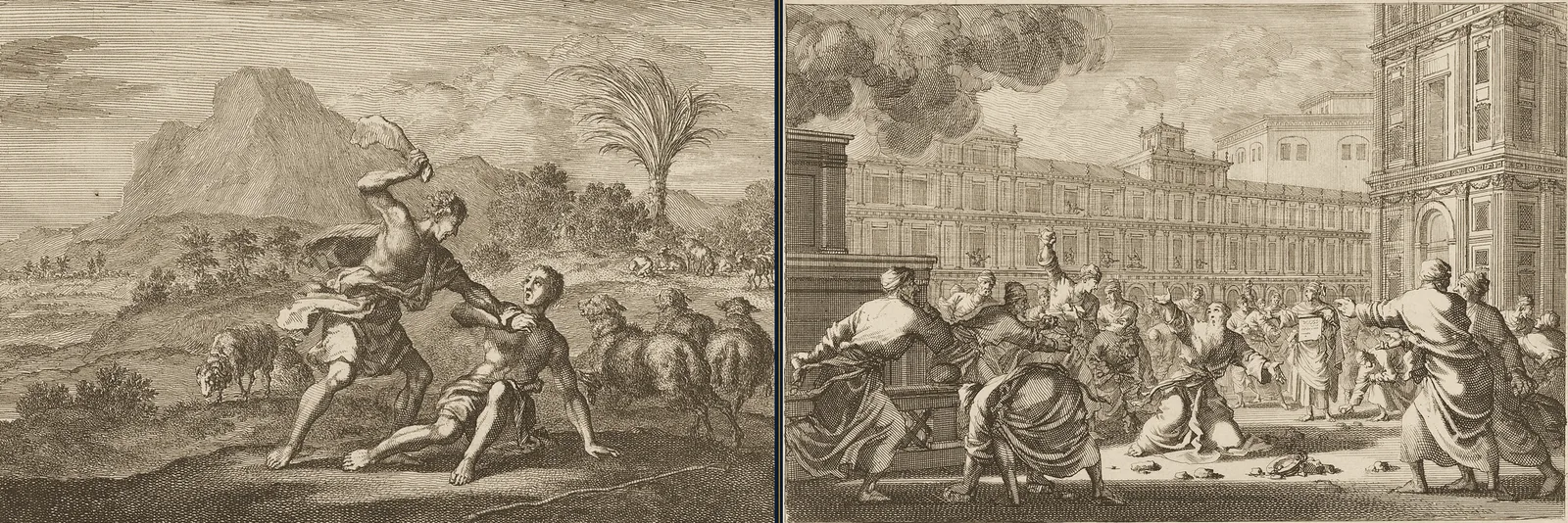
In Matthew 23:34-36, Jesus pronounces a destruction on the nation of Israel for rejecting Him that amounts to all the blood from “Abel to Zachariah son of Barachiah.” The text parallels Luke 11:49-51 that clarifies the righteous blood they are guilty of as belonging to prophets.
Zechariah … Who?
Abel is easily identified from Genesis, but the identity of Zechariah has caused confusion. While the canonical prophet Zechariah is the son of Berechiah (Zech. 1:1), there’s no evidence he served in the temple or was slain between the sanctuary and its altar. That description fits Zechariah son of Jehoiada in 2 Chronicles 24:19-22.
Although critics are quick to brush the wrong father’s name as a scribal error, that’s not the only answer possible. Hebrew culture often uses “son of” as descendant from. Jehoiada had died at 130 years old (2 Chron. 24:15), so it is possible Zechariah was his grandson and the name Berechiah had been preserved in tradition for Jesus’ audience to know. The Scripture often uses telescopic genealogies, like how Matthew condenses the ancestors of Christ into three sets of fourteen generations. The parallel passage in Luke 11 only mentions Zechariah without any father attached.
But Was He a Priest?
Skeptics might point out that the Zechariah stoned in 2 Chronicles served as priest, not in the office of prophet as Jesus claimed (cf. Luke 11:49-51). Of course, neither strictly was Abel one who had a professional prophetic ministry - though Hebrews 11:4 tells he still speaks as an example of faith. The term prophet is used broadly by those with an intimate relationship with God, including Abraham (Genesis 20:7) and David (Acts 2:30). Ezekiel also had a dual office as both prophet and priest.
2 Chronicles 24:20 plainly states the Spirit of God came upon the priest and he declares the words of Yahweh. He is properly then defined as a prophet, though we aren’t told how frequently he exercised the role.
History of Catholic Interpretations
This is not a novel interpretation. In his Commentary on Matthew, Saint Jerome reports that the gospel used by the Nazarenes read “son of Joiada” where Matthew has “son of Barachiah.”2 The Christian community never widely considered this now lost work as canonical, but it does show an interpretive tradition of identifying Zechariah consistent with the Jewish ordering. In the same passage, Jerome also remarks that Barachias means “Blessed of the Lord” and may have functioned as a title rather than indicating his literal father.3 In any case, he flatly rejected the canonical minor prophet as a candidate.
However, Catholic tradition is not unified in the Zechariah reference. Jerome held that the son of Jehoiada was meant. Yet, earlier, Origen of Alexandria popularized the theory that it may refer to the Zechariah of the New Testament, the father of John the Baptist.4 Scripture never records his death. In fact, he took the view from the legendary account in the Protoevangelium of James.5 Nevertheless, both views and others circulated in church history.
More recently, the “Zacharias” article of the 1912 edition of the Catholic Encyclopedia notes, “It is not at all probable that the Prophet Zacharias is referred to by Christ (Matthew 23:35; Luke 11:51) as having been slain by the Jews in the Temple; that Zacharias was the son of Joiada (2 Chronicles 24:20).”6 Although the passing comment agrees with Jerome’s assessment, it draws no conclusions about the canon from it.
By contrast, the New Catholic Encyclopedia attributes Matthew’s wording to “confusion”,7 actually aligning with liberal and critical scholars in that they admit authorial errors in the original text.
And yet, strangely, the note for Luke 11:51 in the NABRE, the officially endorsed Church translation, agrees with most Protestants that Zechariah is “the last murder presented in the Hebrew canon.”8
The Catholic view of Biblical inerrancy has evolved and might seem complicated! Since Vatican II, most Catholic scholars have read the official Church’s teachings as that Scripture is without error “for the sake of salvation”,9 leaving room for historical mistakes.
In any regard, the Catholic Church does not derive their understanding of the canon from any hints in Jesus’ sayings or extrabiblical evidence. The Council of Trent argued its right to define canon from divine authority (which they suppose comes from that canon itself, becoming a circular argument).10
What About the Order?
2 Chronicles falls in the first half of the Old Testament in our modern ordering, fitting a genre grouping common in later Greek and Latin Christian communities. However, the earliest Hebrew traditions matched an ordering between the Law, the Prophets, and the Hagiographa (sacred writings, or Ketuvim). Judas Maccabaeus himself may have standardized the exact divisions when he ordered the preservation of existing writings (2 Macc. 2:14) around 164 BC. Then, later the Prologue to Sirach mentions the Law, the prophets, and other writings. That already established structure matches Jesus’ framing in Luke 24:44, with the Psalms standing in for all the poetic and narrative canonical books.
Within a generation of Jesus, Jewish historian Josephus lists 22 books, divided differently but the same content as the Protestant 39 total. Books written after the reign of Artaxerxes, he explains, were never given the same authority, “because there hath not been an exact succession of prophets since that time.”11 Thus, Josephus excludes the Apocrypha books by the same reasoning Jesus used when He drew the line at the martyred prophet Zechariah.
Later, a tradition preserved in the Babylonian Talmud (Baba Bathra 14b) dated around 200 AD, gives the earliest known Jewish canon list, and shows Chronicles last in order.12 The Hebrew canon closes on a thematic cliffhanger ending with King Cyrus’ edict to rebuild Jerusalem and a call for God’s people to return to their ancestral home.13
The standard Catholic answer is that the Jews reject all of the New Testament, so why would we trust them with discerning God’s revelation? Such a reply misses the point. The New Testament hadn’t been written yet in the intertestamental period for Jews to consider (or even as Jesus spoke in Matthew 23). Paul states in Romans 3:2 that to the Jews were entrusted the oracles of God. Thus, at that time, God appointed the Jewish nation as His stewards to preserve His revealed Word. Jesus does not fault the Jewish leadership for having lost books but for misreading the existing known Scripture (Matt. 22:29; John 5:39).
Zechariah was the last recorded martyr in the canonical order, not the most recent chronologically. In fact, he’s not even the last chronologically in the Jewish canon! Jeremiah 26:20-23 records King Jehoiakim killing Uriah son of Shemaiah some 200 years later. Jesus deliberately chose a framing matching the recognized order in the existing canon of Scripture. He, in essence, is saying the Pharisees were guilty of killing God’s prophets from cover to cover of the inspired Word.
The Jewish leaders would have known well the horrors of the Maccabean Wars. Antiochus IV brutally executed many Jewish martyrs. Yet, none of them held the special privilege of being prophet, as the books themselves admit (1 Maccabees 4:46; 9:27; 14:41), and thus none could fit Jesus’ framing.
Jesus drew a boundary to condemn the Pharisees that naturally excluded the Apocrypha collection. The Council of Trent stands at odds with our Lord Himself.
- Council of Trent, Session 4, “Decree Concerning the Canonical Scriptures” (April 8, 1546), in Canons and Decrees of the Council of Trent, trans. H. J. Schroeder (St. Louis: B. Herder, 1941). ↩
- Jerome, Commentary on Matthew 4 (on Matt. 23:35), in St. Jerome: Commentary on Matthew, trans. Thomas P. Scheck, The Fathers of the Church 117 (Washington, DC: Catholic University of America Press, 2008). For this fragment of the Gospel of the Nazarenes, see also Philipp Vielhauer and George Ogg, trans., “The Gospel of the Nazaraeans,” in The Other Gospels: Non-Canonical Gospel Texts, ed. Ron Cameron (Philadelphia: Westminster Press, 1982), 99–102. ↩
- Jerome, Commentary on Matthew 4 (on Matt. 23:35). ↩
- Origen, quoted in Thomas Aquinas, Catena Aurea: Commentary on the Four Gospels, Collected out of the Works of the Fathers, vol. 1, St. Matthew, ed. John Henry Newman (Oxford: John Henry Parker, 1841), on Matt. 23:35. ↩
- Protevangelium of James 23–24; see J. K. Elliott, ed., The Apocryphal New Testament (Oxford: Clarendon Press, 1993). ↩
- Walter Drum, “Zacharias,” in The Catholic Encyclopedia, vol. 15 (New York: Robert Appleton Company, 1912), https://www.newadvent.org/cathen/15741b.htm. ↩
- Carroll Stuhlmueller, “Zechariah, Book of,” in New Catholic Encyclopedia, 2nd ed. (Detroit: Gale, 2003), https://www.encyclopedia.com/religion/encyclopedias-almanacs-transcripts-and-maps/zechariah-book. ↩
- New American Bible, Revised Edition (Washington, DC: United States Conference of Catholic Bishops, 2011), note on Luke 11:51, https://bible.usccb.org/bible/luke/11. ↩
- Second Vatican Council, Dei Verbum (Dogmatic Constitution on Divine Revelation), November 18, 1965, §11, https://www.vatican.va/archive/hist_councils/ii_vatican_council/documents/vat-ii_const_19651118_dei-verbum_en.html. ↩
- Council of Trent, “Decree Concerning the Canonical Scriptures.” ↩
- Flavius Josephus, Against Apion 1.37–42 (Whiston 1.8), in The Works of Josephus, trans. William Whiston (Peabody, MA: Hendrickson, 1987). ↩
- Babylonian Talmud, Baba Bathra 14b. The medieval Aleppo (c. 930) and Leningrad (1008) codices place Chronicles first among the Writings, so it does seem a later tradition for a different order developed. Scholars debate possible reasoning. Although, Jesus certainly would have only known the order preserved in the Baba Bathra 14b - that is still used by Jews today. ↩
- Roger T. Beckwith, The Old Testament Canon of the New Testament Church: And Its Background in Early Judaism (Wipf and Stock, n.d.), 157–222. ↩