In 2 Samuel 7, God made an unconditional covenant with David that his descendant would forever sit on his throne, rule over his kingdom, and build a temple for God’s dwelling. Only Jesus Christ will perfectly fulfill every element of the promise in His Millennial reign.
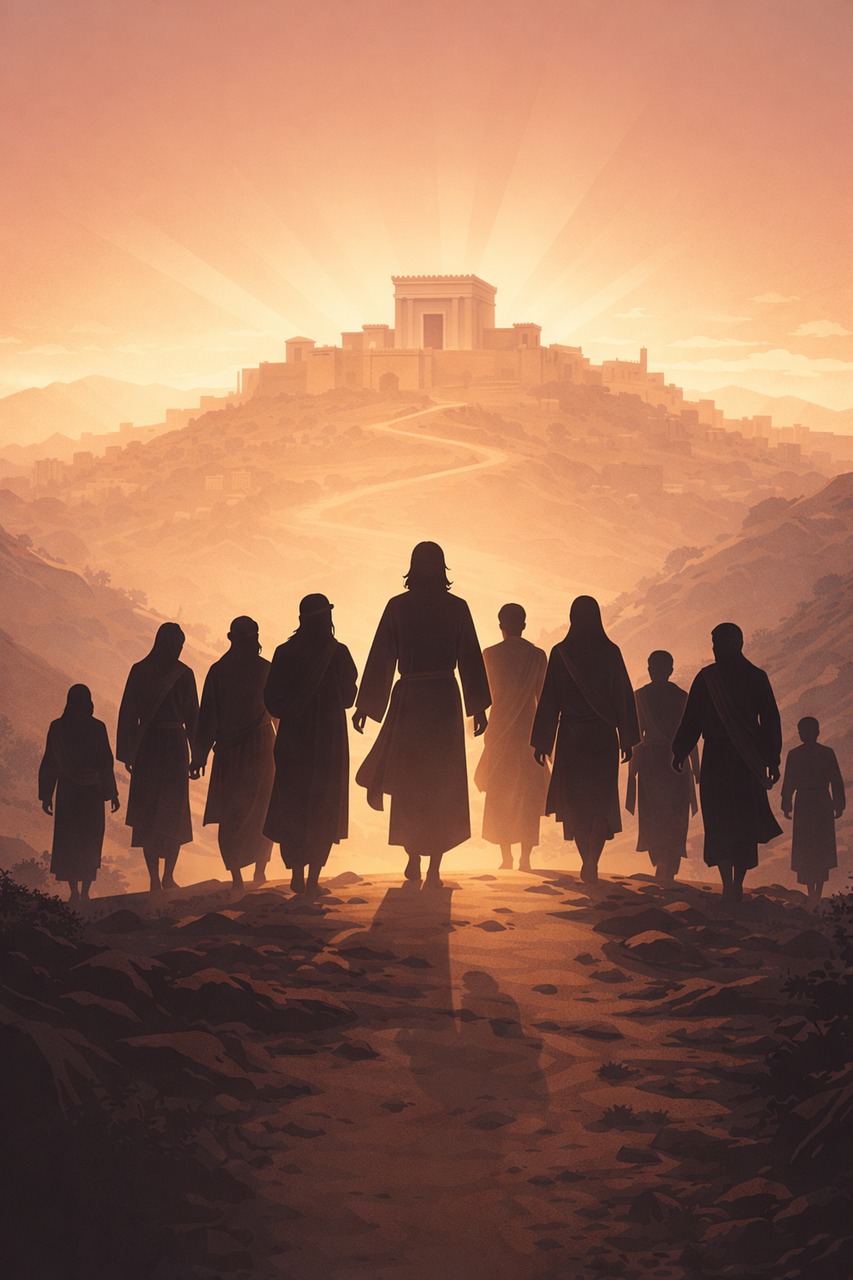
Image by Roger Casco from Pixabay. Reminds me of Zech. 8:23
Established House
The Israelites kept the ark guarded in Abinadab’s house for 20 years (1 Samuel 7:1–2) after recapturing it from the Philistines. David built a palace for himself in Jerusalem. Then he brought the ark to his house in a great procession, though he lamented it lacked its own dwelling.
God comforts David with a promise that his descendant would establish a house for His name and David’s house forever. Solomon, his immediate son, would fulfill the promise in a near sense by building the temple under a peaceful rule ((1 Chronicles 22:8–10)).
However, that house of God was destroyed in 587 BC. And yet, God assured Israel in Zechariah 6:12–13 that a future priest-king will establish a temple and rule from it forever. Psalm 132 likewise affirms God will appoint the fruit of David’s body, who would be God, to forever rule from His dwelling. Peter directly cites this passage in Acts 2:30 to prove Jesus is the Messiah.
God does not now have His dwelling as promised to David. While the Holy Spirit resides in believers ((Ephesians 1:13–14)), the Davidic Covenant speaks of a literal temple that would be in operation forever. Zechariah 14 and Isaiah 2 further detail God’s presence physically dwelling with His people.
Ezekiel 43:1–9 describes God’s glory returning to a new temple as a person who rules in holiness. Yet, God will not establish this temple until after He has regathered Israel to the land where they will experience national regeneration (Ezekiel 36:24–28).
Forever Kingdom & Throne
In 2 Samuel 7:13, God promised to establish the throne of David’s offspring forever. Solomon’s reign ended in disaster being split into Northern and Southern kingdoms. But David’s throne ruled over a united Israel. The descendant of the covenant will rule from the same office over his house, Jerusalem, in his land. God confirmed in Psalm 89:35–37 His promised King will reign as sure as the sun and moon exists fixed in the sky.
The angel Gabriel announces Jesus as the promised Davidic king in Luke 1:32–33, alluding to Isaiah 9:6-7. Jesus Himself claimed to be the Messiah, both as David’s heir and the Lord, by quoting Psalms 110 in Matthew 22:41–46. Finally, in Revelation 5:5 He is pictured as the Lion of Genesis 49:9–10 and Root of David, Jesse’s Branch from Isaiah 11:1.
Christ ruling as head of the Church now does not fulfill the promise to David. To meet the same qualifications, He must physically reign over a literal Kingdom. This necessarily implies actual boundaries and administration of governance.
Believers should eagerly expect the inauguration of God’s Kingdom, beautifully depicted in Revelation 20:1–6, when Satan will no longer deceive nations and the overcomers will reign with the Son.