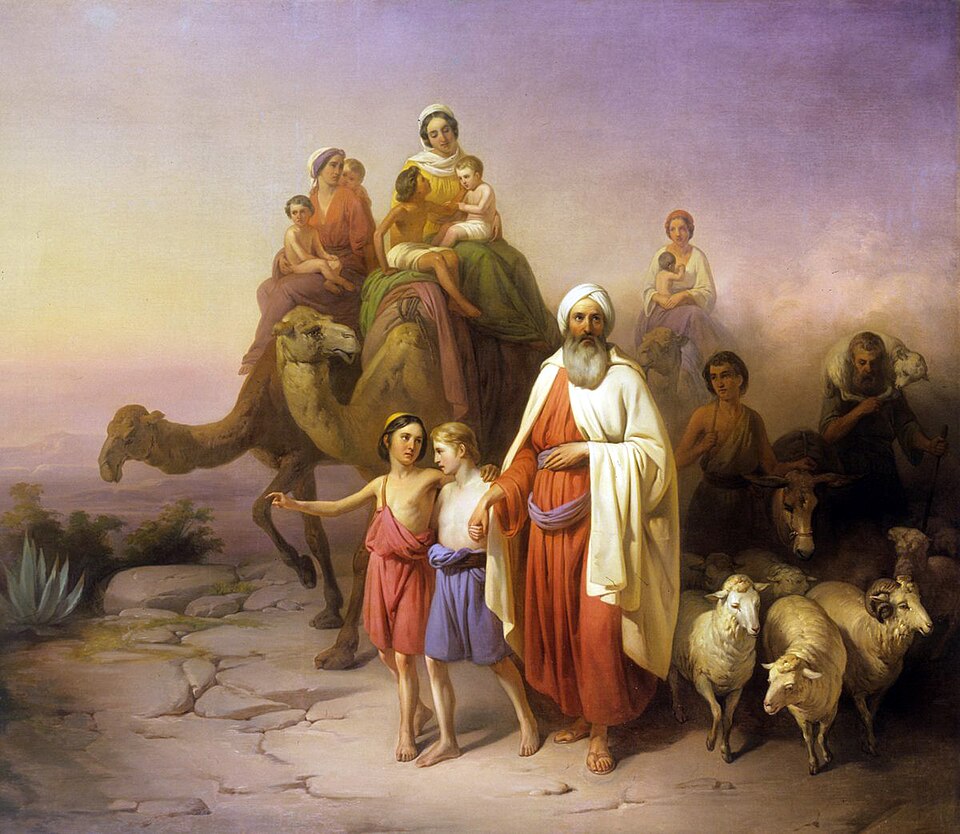
This was originally my final for an Old Testament Survey course answering the prompt, “Trace the life of Abraham through the Genesis account and describe how the New Testament applies the narrative.” It was a blessing to write this and I pray it benefits you in your faith. Abraham is the model of faithfulness and shows us the benefits of walking after God’s promises.
Abraham is a central figure in the biblical narrative as a foundational model of faith, both for right standing with God and for practical living. His story in Genesis acts as a prologue to the nation of Israel, contains the covenant promises, and stands as a timeless example of godly obedience leading to blessing.
Steward of Promise
When humanity failed the test of stewardship in the Garden of Eden, God immediately offered the hope of redemption in the Seed of the woman. Cain, whose name Eve tied to having “gotten a man” with the Lord’s help (Genesis 4:1), failed to meet any expectation of a deliverer. The line of Seth would preserve the record for anticipation of the Savior.
By Genesis 6, an angelic conflict attempted to corrupt humanity’s lineage by commingling with women. God preserved one family through righteous Noah, which became many nations. The narrative further defines the promised line more narrowly by Shem down to Terah, the father of Abraham.
Therefore, Abraham acted as the steward of God’s dispensation of promise. In other words, he became an administrator of God’s blessings by faithfully responding to a progressively revealed, yet already existing, plan of redemption amid cosmic conflict.
The essence of God’s underlying plan has always been offering eternal life through one promised descendant. God chose to unconditionally use Abraham to unfold greater assurances of His program to undo the curse of the Serpent and to restore the proper dominion of man over the earth (Gen. 1:28). The conflict of evil to usurp the mediatorial reign of God will find resolution in history on the basis of God’s promises to Abraham.
Call to Inheritance Blessing (Genesis 12–14)
Genesis 12 first introduces Abraham (then Abram). He comes from a believing family according to Genesis 31:53. God’s faithful remnant persevered in the knowledge of the promised Messiah. They appear to have had a mixed faith, falling into idol worship (Joshua 24:2). However, Hebrews 11:8 reveals Abram responded in faith to the call to leave his country expecting an inheritance, implying he already understood eternal rewards. He certainly does not question which god is speaking to him!
God promised Abram that he would become a great nation, have a great name, that He would abundantly bless him, and that in him all nations of the earth would be blessed (Gen. 12:2–3). Abram only had to leave his family and house to journey to the land in order to appropriate the blessings.
He had a divided response, taking his father and his nephew Lot with their families. His familial entanglement created later hardships. Nevertheless, when he built an altar in the land, God speaks again and adds that his descendants will possess the land.
Romans 4:13 rephrases Genesis 12:3 as God promising Abraham he would be “heir of the world.” Paul understood the covenant blessing to all nations as prophetically speaking of a world to come exclusively composed of believers who have received his blessing of justification. Just as Abraham would inherit the physical land of Israel, he will inherit the world to come through his spiritual descendants.
Interlude: Trial of Faith
Genesis 12 continues with a famine in the promised land causing Abram to flee to Egypt, surely to his disappointment. He lies to Pharaoh about his wife Sarai being his sister, and her later capture invokes God’s wrath. They are sent out from Egypt and settle at Bethel where they had been at first.
Having come full circle, Abram grows prosperous and competes economically with his nephew Lot, creating strife among their herdsmen. One trial of faith led to another.
Genesis 13:7 also makes the point that the native Canaanites and Perizzites dwelt in the land. God had promised his descendants would possess and rule the land, not cohabitate it with pagans. The original Genesis readers, Israelites preparing to enter the land, should have noted this poignant detail.
Abram attempts to resolve the conflict by allowing Lot the choice of land, settling for the other portion himself. While appearing humble and peaceable, he is perhaps hoping to keep the more fertile ground. Lot noticed the plain of the Jordan as like the garden of the Lord, or more familiarly, like the Egypt Abram had recently left (Gen. 13:10–12).
The mention of the wicked population in Sodom should remind believers not to look merely at material appearances. God made a promise of future blessing that Abram needed to receive in faith.
The Innumerable Blessing
Abram might have doubted whether he had been overgenerous in giving Lot the first choice. As if to comfort him, God spoke again, asking him to look in each cardinal direction. Lot may have chosen the east to settle, but God assured Abram a nation in the land he could see in every direction.
Significantly, God adds that it would belong to him and his descendants as a possession forever. His descendants will be uncountable, like the dust of the earth (Gen. 13:16). Surely there would be no competing populations, unlike the petty squabble with Lot’s herdsmen.
The Jewish people have never amounted to more than a small fraction of the world population and do not all reside in the Promised Land. Yet the author of Hebrews anticipates fulfillment of God’s promise in a Kingdom ruled by Jesus Christ, Abraham’s descendant, who puts all things in subjection to Him. The Lord will call believers His brethren, and become the captain of many sons of glory (Hebrews 2:8–13).
The Melchizedek Blessing
Genesis 14 details an ancient international war of sorts. Four allied kings led by Chedorlaomer fought against the five kings with Sodom. The victorious raiders carried off Lot with his family and wealth, along with all the goods of the city.
Abram heard of his troublesome relative falling captive and amazingly organized a night rescue with only 318 men. The king of Sodom, Bera, met him to retrieve his claim of the loot. The patriarch, called Abram the Hebrew for the first time, is almost seen as an equal among the city-states (Gen. 14:13–17).
Melchizedek, being king of Salem and priest of God, then entered the scene without introduction and blessed Abram as of God Most High before all the participants (Gen. 14:18–20). God had made good on one portion of His promise, that He would make Abram’s name great. Indeed, billions of people today still regard Abraham as an example of God’s blessedness.
Abram then tithes of the spoils to Melchizedek, proving his office greater than the Levitical order. The writer of Hebrews argues it is necessary that Christ hold this eternal and unchanging priesthood to continually intercede for saints and mediate the New Covenant (Heb. 7:1–24).
King Bera offered Abram the booty in exchange for the captives. He denied the deal, not wanting to be indebted to Sodom. He looked beyond the riches of this world to the enduring and miraculous promise of God. The wealth of a wicked king would never compare!
Covenant Vision (Genesis 15)
Genesis 15 is perhaps the most foundational chapter of the Bible. Everything forward is God making good on His claims. He would provide abundant assurances that His promises are by grace alone, received by faith.
Abram may have had second thoughts about turning down the riches of Sodom. The better hope of God’s blessing seemed impossible biologically, Abram being about eighty-five years old. Perhaps, he replied to God, the promise was not literal and could then be fulfilled through the legal heir of the house, Eliezer of Damascus. God appeared in a vision to Abram and comforts him with the reminder that He is his exceedingly great reward.
The Justification Blessing
The Lord’s answer is similar to Genesis 13:16, except now the visible, beautiful night sky was enough to finally assure Abram (Gen. 15:5). He believed and God accounted that faith for righteousness (Gen. 15:6).
Some interpreters, like Joseph Dillow, argue Genesis 15:6 refers back to a conversion when he left Ur. He had previously acted in faith, received blessings, and built altars in worship of God (Gen. 12:8; 13:18).
In any event, his faith serves as a model for all people to receive right standing with God. Paul, in Galatians 3:8, connects the good news of Jesus Christ as the promised descendant of Abraham. Every nation can now experience the blessing of justification by the same object of faith — the Seed, being the offspring of Abraham, who secured victory over Satan in defeating death (Hebrews 2:14).
Romans 4 and Galatians 3 both rightly observe that Abraham’s justification came before the sign of circumcision and 430 years before the Law was given (Gal. 3:17). No moral action merited his favor with God. Works cannot count towards meriting or maintaining grace.
The Unconditional Oath
In Genesis 15:8, Abram asked a natural question: “Lord God, how shall I know that I will inherit it?” He believed, but wondered how it would play out.
In Ancient Near East culture, covenants were sealed by an oath from both parties. They would sacrifice animals and walk down a path between the divided halves, symbolizing that if either should break the terms, the same fate would befall them. God instructs Abram to set up this ceremony. However, a deep sleep fell on him, and God alone appears to have passed through the animal halves in fire. If any part relied on a fallible man, the promise would quickly become void.
In his sleep, Abram saw a terrible vision of the future. God declared how his descendants would be afflicted for 400 years in a foreign land, but that God would judge that nation and deliver them with great riches back to the Promised Land.
God defined the boundary of that land as the whole region from the border of Egypt to the Euphrates (Gen. 15:18). Elsewhere God further outlines the border as extending to the Mediterranean in the west (Joshua 1:4) and as far north as Lebanon (Deut. 11:24).
The Israelites, the descendants of Abraham, have never reigned over all the land God promised. The fulfillment awaits their future restoration in the Millennial Kingdom.
Casting Off the Bondwoman (Genesis 16 & 21)
Genesis 16 gives the backstory of the Ishmaelites, the descendants of Ishmael. Abram listened to his wife’s plan to conceive a child with their slave woman Hagar. While he believed just prior, Sarai convinced him, for a time, that her dead womb proved they needed extramarital assistance. Romans 4:19–20 affirms Abram did not waver in faith. He knew the promise would come about, but struggled to grasp it as a biological miracle.
As expected, Sarai became jealous when Hagar conceived and treated her harshly (Gen. 16:6). Abram later expelled her from the household (Gen. 21:10–14). Paul, in Galatians 4:21–31, applies the event symbolically, with Ishmael, the son of slavery, representing the Law. If believers abandon the freedom found in the Son by placing themselves under the yoke of the Law, they will forfeit rulership in the Kingdom.
The Son of Promise (Genesis 17–18)
By Genesis 17 Abram is ninety-nine years old (Gen. 17:1). God appeared and confirmed the covenant made some fourteen years prior through a visible sign of circumcision. He then renamed the patriarch and his wife as Abraham and Sarah, and gave the name of the son as Isaac. Each generation should continue practicing the rite as a reminder of God’s faithfulness. Abraham laughed at hearing God’s promise (Gen. 17:17). Surely, he thought, it would be easier to use Ishmael!
Then the Lord physically appeared with two other men, presumed to be the angels who rescued Lot. Sarah, listening in on their conversation, also laughed at the proposition that she would conceive a child. She would later laugh in rejoicing over his birth (Gen. 21:6).
The Lord, likely the preincarnate Christ, had a private conversation with Abraham to disclose His judgment of Sodom. He revealed His abundant mercy in telling how the righteousness of only a few persons could spare the whole city. Jesus, in John 8:56, likely alludes to this event. Abraham saw the Lord, Yahweh, through Jesus — the eternal image of the unseen Father.
Friend of God (Genesis 22–23)
Finally, Genesis 22 shows the culmination of Abraham’s faithfulness and the fruit of rewards. God asked Abraham to take his son Isaac, the only son of the promise, to a mountain and sacrifice him. He obeyed the command, and told his servants, “… we will come back to you.” Hebrews 11:17–19 observes his statement as evidence he believed in God’s power of resurrection. Even death would not stop God’s promise.
In a prefigurement of Christ, God provides a substitute for the sacrifice. Abraham seemed to have anticipated the provision beforehand, stating, “God will provide himself the lamb for a burnt offering” (Gen. 22:8). Indeed, Jesus Christ is the Lamb of God who takes away the sin of the world (John 1:29).
As he passes the test, the Lord swore by Himself to bless Abraham. God repeated the previous blessings of descendants but added that they will possess the gates of their enemies (Gen. 22:17).
The author of Hebrews references God’s rewarding Abraham as evidence He will always remember acts of service. Believers who patiently endure will rule over nations in the Kingdom as heirs with Abraham (Heb. 6:9–18).
Similarly, James encourages his readers to have a lively faith to meet practical needs, using the example of Abraham. His faith proved him a friend of God before the world. His faith became complete through obedience. He was already justified, declared right before God, decades earlier, yet became vindicated before men by his actions (James 2:21–24; Rom. 4:2).
When Sarah died in Genesis 23, Abraham made great effort to ensure she was buried in the land. He had faith they would rise again to enjoy it. All believers today will be blessed in following his example by eagerly awaiting the Kingdom through obedient living.
Bibliography
Dillow, Joseph C. The Reign of the Servant Kings: A Study of Eternal Security and The Final Significance of Man. 3rd ed. Hayesville, NC: Schoettle Pub. Co., 2001.
Johnson, Elliott E. A Dispensational Biblical Theology. Allen, TX: Bold Grace Ministries, 2016.
Rheaume, Randy. “‘Abraham Rejoiced to See My Day and Saw It’: Jesus’ Take on Theophanies.” Grace Evangelical Society, March 1, 2019. https://faithalone.org/journal-articles/abraham-rejoiced-to-see-my-day-and-saw-it-jesus-take-on-theophanies/.
Walvoord, John F., Roy B. Zuck, and Dallas Theological Seminary, eds. The Bible Knowledge Commentary: Old Testament. Wheaton, Ill: Victor Books, 1983.
Wilkin, Robert N., ed. The Grace New Testament Commentary. Rev. ed. Denton, TX: Grace Evangelical Society, 2019.
Yates, Kenneth Wayne. Hebrews: Partners With Christ. Denton, TX: Grace Evangelical Society, 2019.